Choosing between an oil-immersed and a cast-resin dry-type transformer is one of the first decisions an engineer or procurement manager makes when specifying medium-voltage equipment, and it shapes civil works, fire protection, maintenance planning and total cost of ownership for the life of the asset. Both technologies are mature, covered by IEC 60076 (with cast-resin units additionally following IEC 60076-11), and both are manufactured across the same power range for most distribution applications. The decision is rarely about which technology is "better" in the abstract; it is about which one fits the installation location, the applicable fire code, the maintenance regime available on site, and the ambient and loading conditions the unit will see over its service life.
How the two technologies differ
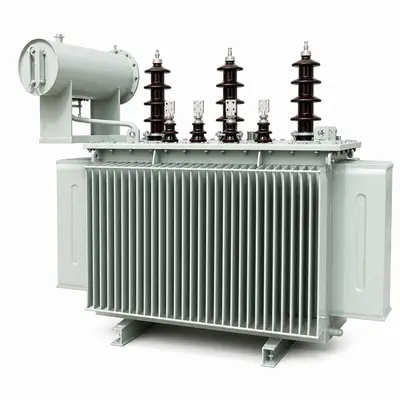
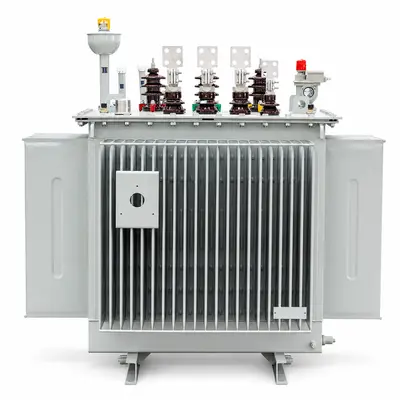
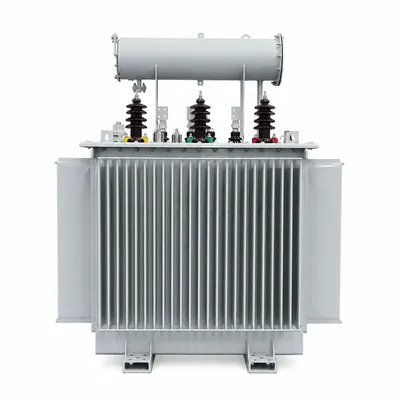
An oil-immersed transformer uses mineral oil (or, less commonly, a synthetic or natural ester fluid) both as the dielectric medium between windings and core, and as the primary cooling medium, circulating by natural or forced convection to radiators or coolers. A dry-type transformer, in the cast-resin form most common in medium-voltage distribution, encapsulates the windings in an epoxy resin under vacuum, relying on air (natural convection, class AN, or forced, class AF) for cooling and on the solid insulation system for dielectric withstand. This single difference in cooling and insulation medium drives almost every other distinction between the two.
Losses are one of the clearest differentiators. Oil provides efficient heat transfer and allows tighter, more compact winding designs with lower no-load losses (core losses) and, in most designs, lower load losses at comparable impedance, because the core and windings can be optimised without the thermal constraints that resin encapsulation imposes. Cast-resin units, by contrast, must keep hot-spot temperatures within the resin system's thermal class (commonly F or H), which tends to favour slightly larger, better-ventilated designs; efficiency has improved significantly with modern designs, but oil-immersed units still usually hold a losses advantage at equal rating, which matters over a 20-30 year operating life where energy losses accumulate into a substantial cost.
Fire behaviour is the other decisive factor, and it is often the one that settles the choice regardless of losses or price. Mineral oil is combustible, and while modern oil-immersed transformers are safe when properly protected with bunding, oil-drainage pits, fire walls and, where the risk assessment calls for it, automatic fire suppression, the residual risk and the associated civil engineering cost are why building codes in most countries restrict oil-filled equipment indoors, in basements, in high-rise buildings, and in occupied spaces such as hospitals, shopping centres, metro stations and data centres. Cast-resin dry-type transformers, having no flammable liquid, carry a self-extinguishing classification (typically F1 per IEC 60076-11) and no oil to leak or catch fire, which is why they are the default recommendation for indoor substations, plant rooms inside occupied buildings and any location with strict fire codes or limited access for fire brigades.
Cost, maintenance and overload behaviour
On a like-for-like kVA and voltage basis, oil-immersed transformers are usually less expensive to manufacture, since resin encapsulation, vacuum casting and the associated tooling add cost to a dry-type design. That price gap narrows at higher ratings and can reverse once the civil cost of oil containment, fire walls, oil-collection pits and, in some jurisdictions, mandatory fire-resistant fluids, is included in an indoor project. For outdoor and utility-style installations, where none of that additional civil protection is usually required beyond standard fencing and clearances, oil-immersed transformers remain the more economical option in the large majority of cases.
Maintenance regimes differ meaningfully. Oil-immersed transformers need periodic oil sampling (dissolved gas analysis, moisture, dielectric strength), oil level checks via the conservator or sealed-tank gas cushion, and eventual oil filtration or replacement; accessories such as Buchholz relays, oil and winding temperature indicators and pressure relief devices need regular functional checks. Cast-resin dry-type transformers have a simpler maintenance profile: periodic cleaning of the windings (especially in dusty environments), insulation resistance testing, and checks of the cooling fans on AF-cooled units, with no fluid to sample or replace. Sites with limited access for oil trucks, or without a maintenance team experienced in oil testing, often find dry-type units operationally simpler over the long term.
Short-term overload capability tends to favour oil-immersed designs. The oil's thermal mass and effective conduction give the winding hot-spot more margin during transient overloads, and standard overload tables (IEC 60076-7 for oil-immersed, IEC 60076-12 for dry-type) reflect this, generally allowing oil-immersed units a higher and longer overload before insulation life is meaningfully consumed. Where a plant expects cyclic loading well above nameplate rating for defined periods, oil-immersed transformers are usually the safer specification.
Environment, IP rating and altitude
Outdoor exposure, humidity, salt-laden coastal air, and dust all interact differently with the two technologies. Oil-immersed transformers are inherently well sealed against the environment (hermetically sealed tank or conservator with a breather), and their enclosures are straightforward to rate to IP54 or higher for coastal and industrial sites. Dry-type transformers, with exposed resin-cast windings, are more sensitive to condensation, dust accumulation and aggressive atmospheres unless housed in an adequately IP-rated enclosure with appropriate cooling ventilation and, where needed, anti-condensation heaters; this pushes many outdoor dry-type installations toward a housed or kiosk arrangement rather than an open frame.
Altitude affects both technologies through reduced air density, which lowers the cooling effectiveness of air-cooled equipment and reduces the dielectric strength of air gaps and, for dry-type units, of the surrounding air used for cooling. IEC 60076-1 gives standard correction factors for installations above 1,000 m; above that, both technologies typically need de-rating or a design uprating, but the effect is generally more pronounced for dry-type units because they depend entirely on air for cooling, whereas oil-immersed units cool primarily through the oil and radiators and are less sensitive to air density for the cooling function itself (though external air-cooled radiators still see some reduction in heat rejection).
Typical applications and a decision summary
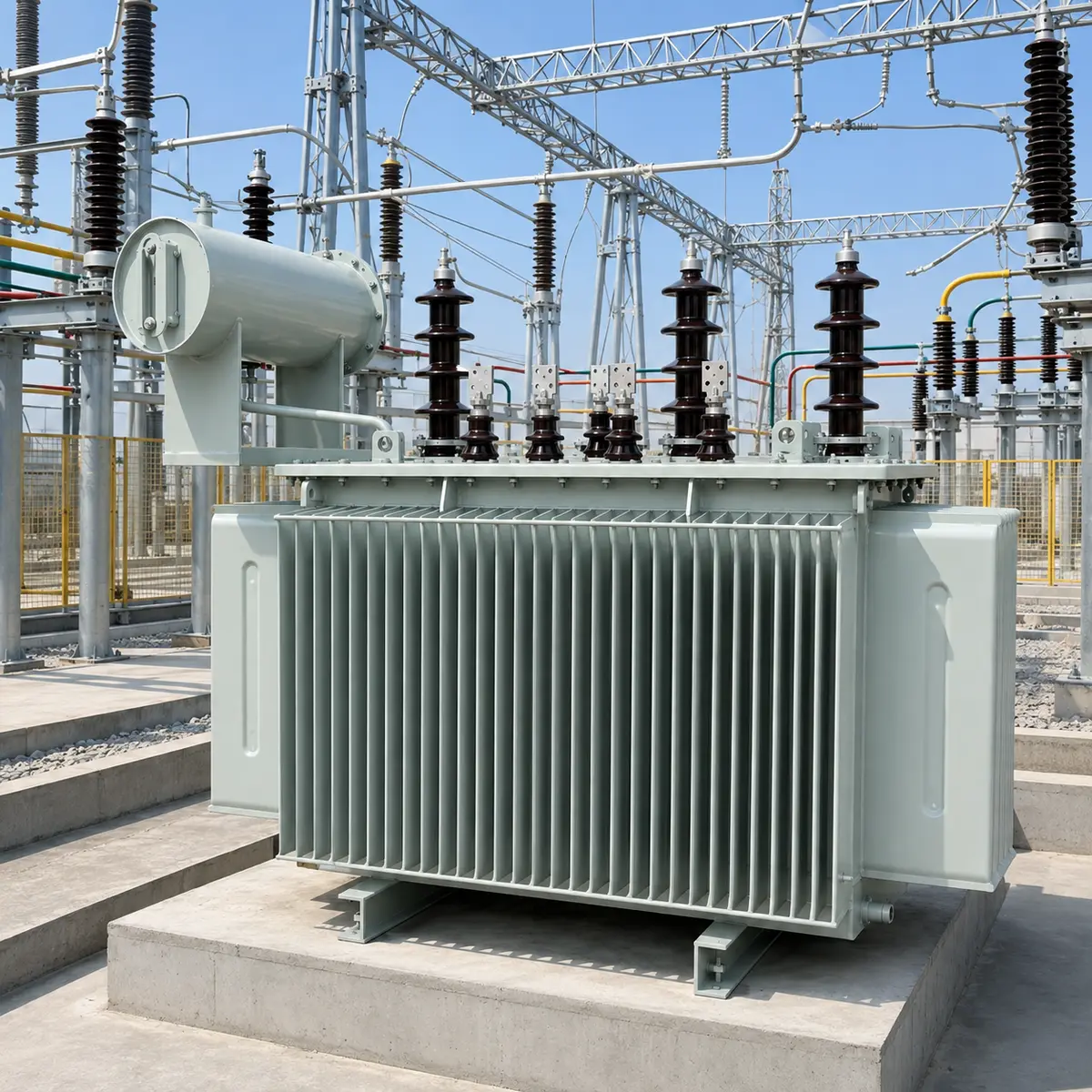
Oil-immersed transformers dominate utility substations, pad-mounted and pole-mounted distribution, industrial plants with outdoor switchyards, solar and wind farm step-up applications, and any outdoor MV/HV installation where losses and cost per kVA matter more than fire classification. Cast-resin dry-type transformers are the standard choice for indoor substations in commercial and high-rise buildings, hospitals, data centres, metro and rail stations, shopping centres, and any application where the fire code, insurer requirements or building layout make an oil-filled unit impractical or non-compliant.
| Criterion | Oil-Immersed | Cast-Resin Dry-Type |
|---|---|---|
| Typical losses | Generally lower | Slightly higher, improving with design |
| Fire classification | Combustible fluid; needs bunding/fire protection | Self-extinguishing (F1); no fluid to burn |
| Indoor/occupied buildings | Restricted by most fire codes | Standard choice |
| Purchase cost (like-for-like) | Usually lower | Usually higher |
| Maintenance | Oil sampling, DGA, level checks | Cleaning, insulation checks, fan checks (AF) |
| Short-term overload | Better margin | More limited |
| Environment/IP | Sealed tank, good for coastal/harsh sites | Needs enclosure for outdoor/harsh sites |
| Altitude sensitivity | Moderate | Higher (air-cooled) |
| Typical use | Outdoor, utility, industrial, renewables | Indoor, high-rise, fire-sensitive sites |
In practice, many projects are decided by a single hard constraint, most often the fire code for an indoor location, before losses or cost are even compared. Where both technologies are technically viable, the decision should weigh total lifecycle cost (purchase price plus capitalised losses over the expected life), the maintenance capability actually available on site, and the ambient and loading profile the transformer will experience, rather than upfront price alone.
Talk to Millenium
Millenium Electric manufactures both oil-immersed and cast-resin dry-type transformers from 5 kVA to 31,500 kVA (power transformers to 110 kV class) to IEC 60076 and ANSI/IEEE variants. Send us your site conditions, fire code and load profile and our engineering team will recommend and quote the right type for your project.