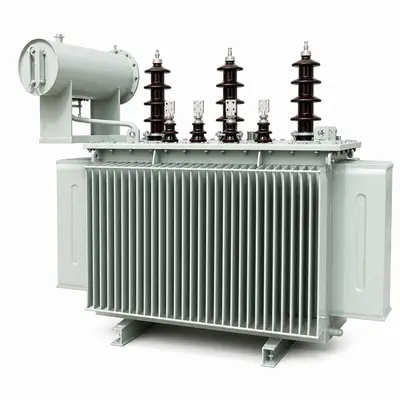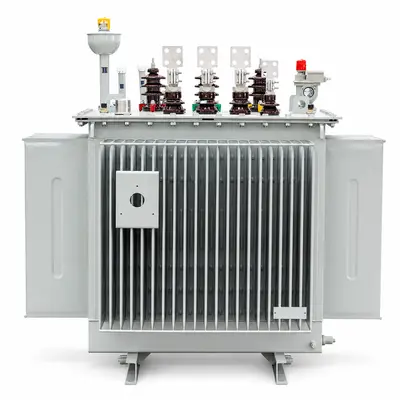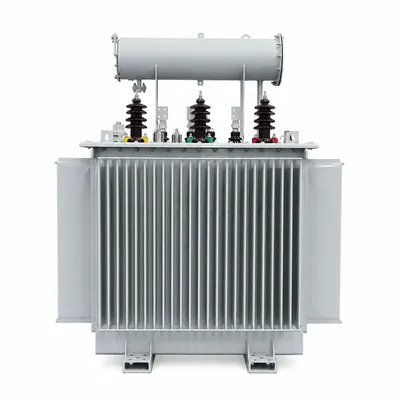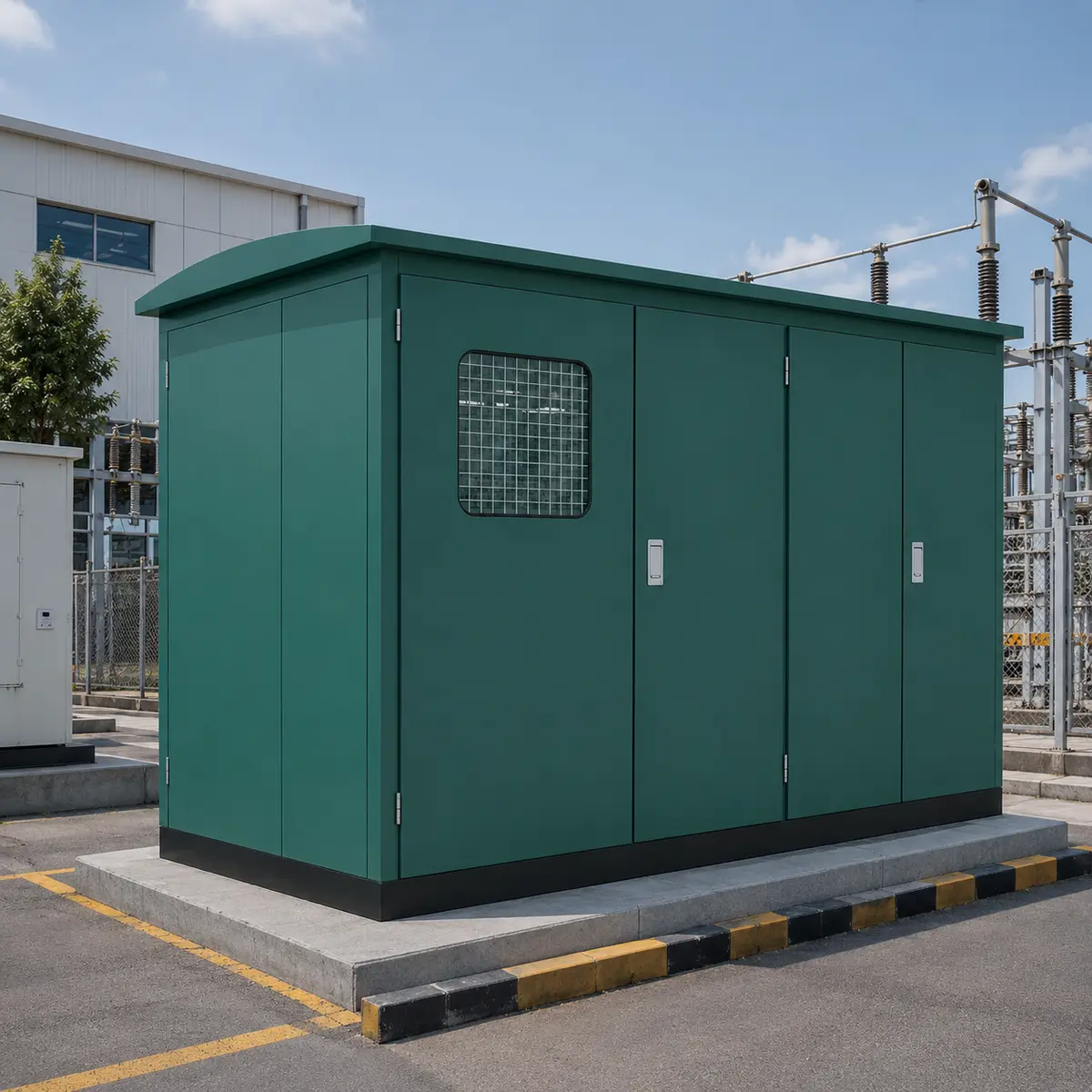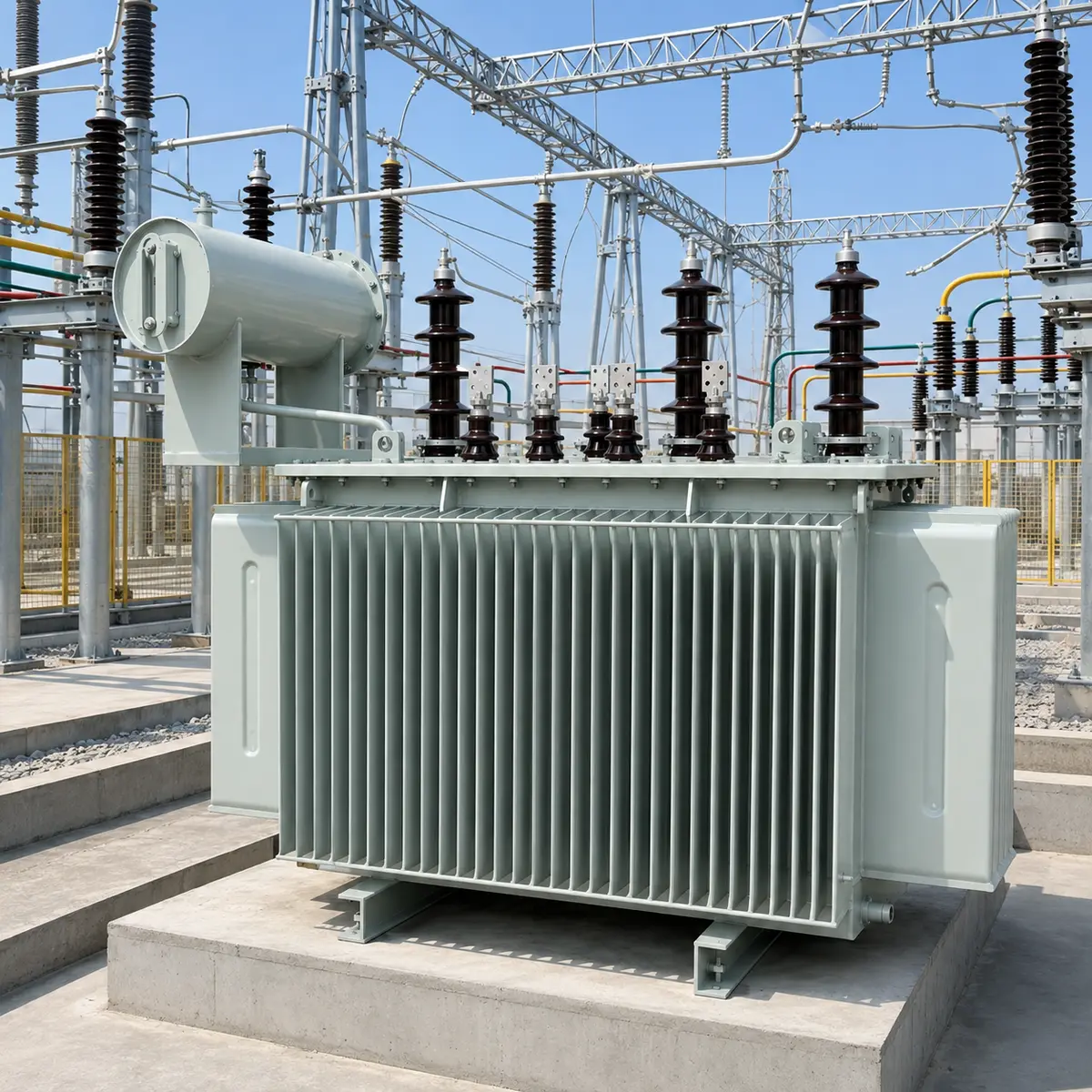
Specifying a transformer for a 60 Hz market such as the USA, Canada, Mexico, Brazil, Saudi Arabia, the Philippines, South Korea, Taiwan or much of Latin America is not simply a matter of changing a nameplate frequency. In most of these markets, 60 Hz operation goes hand in hand with the ANSI/IEEE C57 family of standards, which differs from IEC 60076 in voltage classes, insulation levels, temperature rise conventions, bushing and termination practice, and testing methodology. Some 60 Hz countries, notably parts of Latin America, the Philippines and Taiwan, actually mix conventions - 60 Hz frequency with IEC-style voltages and sometimes IEC test methods - so the first step in any cross-border transformer purchase is confirming which standard set actually applies, not just the frequency.
Frequency and core design
The direct effect of frequency on transformer design is real but modest for a competent manufacturer: at 60 Hz, for a given flux density and voltage, the core cross-section can be slightly smaller than at 50 Hz because flux linkage per cycle scales inversely with frequency, and manufacturers routinely adjust the number of turns and core dimensions to optimise a design for either frequency. The practical significance for a buyer is less about core steel and more about what a "60 Hz market" implies for every other parameter, since almost all 60 Hz territories built their electricity infrastructure around ANSI/IEEE conventions inherited from North American practice. A transformer bought for a 60 Hz country should therefore be engineered from the outset against the applicable standard for that market, not adapted after the fact from a 50 Hz IEC design.
Voltage classes and insulation levels
ANSI/IEEE practice uses a different set of preferred medium-voltage classes than IEC. Where IEC markets standardise around 11 kV, 22 kV, 33 kV and similar values, ANSI markets commonly use 13.8 kV, 24.9 kV and 34.5 kV as distribution voltages, reflecting the historical development of the North American grid. Basic insulation level (BIL) is specified differently as well: ANSI/IEEE defines BIL in kV crest for a given voltage class (for example a 15 kV class winding is commonly rated 95 kV BIL, and a 35 kV class winding 150 kV BIL), and these values do not map one-to-one onto IEC's lightning impulse withstand levels for equivalent voltage classes, so a bushing, arrester or termination rated for one system cannot be assumed compatible with the other without checking the actual kV BIL figure.
Preferred power ratings also differ: ANSI/IEEE distribution and power transformers are commonly rated in a series of kVA/MVA values (for example 25, 50, 75, 100, 167, 250, 333, 500 kVA for pad-mount units) that reflect North American utility practice, distinct from the IEC-preferred series more common outside the Americas. Buyers should confirm the exact rating expected by the utility or specification rather than assuming the nearest IEC-standard kVA size will be accepted.
Temperature rise, impedance and bushings
ANSI/IEEE C57.12.00 specifies a standard 65 °C average winding temperature rise (over a 30 °C or 40 °C ambient reference, depending on the class) as the default for most liquid-immersed distribution and power transformers, whereas IEC 60076-2 offers both 55 °C and 65 °C rise options depending on design and insulation system. This affects both the loading tables used by utilities (ANSI/IEEE loading guides, C57.91, differ numerically from IEC 60076-7) and the thermal margin assumed for overload duty, so a transformer's rated temperature rise class should always be confirmed against the standard actually governing the installation, not assumed equivalent between systems.
Impedance values follow different conventional ranges by rating and voltage class in ANSI practice compared with IEC, driven by different historical fault-level and coordination philosophies with upstream ANSI-style switchgear and protective relaying; project-specific impedance should always be confirmed against the utility's or specification's requirement rather than a generic IEC default.
Bushing and termination conventions are one of the most visible practical differences. ANSI-market pad-mounted transformers overwhelmingly use loop-feed primary bushings with elbow connectors (200 A or 600 A rated, per IEEE 386), allowing underground cable to loop from one transformer to the next using bolted or bail-latch elbows - a system rarely used in IEC markets, which more commonly bring MV cable into a separate ring main unit or compact substation compartment ahead of the transformer rather than terminating directly on transformer-mounted elbows.
Pad-mounted and pole-mounted conventions: the CSP concept
ANSI-style pad-mounted and pole-mounted transformers commonly follow the "completely self-protected" (CSP) concept, integrating internal primary fusing (and, on many pole-mount designs, a secondary circuit breaker and lightning arrester) directly into the transformer tank, so the unit protects itself against overload and fault conditions without a separate switchgear enclosure. European-style compact substations more commonly separate these functions into a distinct ring main unit or LV panel ahead of a simpler, unprotected transformer. This has direct implications for footprint, coordination with upstream protection, and spare-parts strategy: a CSP unit is more self-contained but ties fusing and transformer replacement together, while a European-style arrangement allows independent replacement of switchgear and transformer.
Testing and certification
Testing follows IEEE C57.12.00 (general requirements) and C57.12.90 (test code) rather than IEC 60076, and while the two systems test broadly similar things - ratio, polarity, resistance, impedance, losses, dielectric withstand, temperature rise, and lightning impulse - the specific test sequences, acceptance tolerances, and report formats differ, and a factory test report written to one standard is not automatically accepted as proof of compliance with the other. Where the installation is in the USA or Canada, UL listing is frequently a separate, additional requirement layered on top of ANSI/IEEE design compliance, covering product safety certification rather than electrical design, and should be confirmed as a project requirement (and lead-time factor) early in procurement, since it typically requires factory audit and specific UL-recognised components. Documentation expectations also differ: ANSI/IEEE-market utilities commonly expect nameplate data, outline drawings and test reports formatted to their own templates, so it is worth confirming documentation format alongside the technical standard.
| Aspect | IEC (typical) | ANSI/IEEE (typical, 60 Hz markets) |
|---|---|---|
| Frequency | 50 Hz | 60 Hz |
| MV voltage classes | 11 kV, 22 kV, 33 kV | 13.8 kV, 24.9 kV, 34.5 kV |
| Insulation level | Lightning impulse per IEC 60076-3 | BIL per IEEE C57.12.00 |
| Temperature rise | 55 °C or 65 °C options | 65 °C standard |
| Design/test standard | IEC 60076 series | IEEE C57.12.00 / C57.12.90 |
| Bushings/termination | Cable box or RMU ahead of transformer | Loop-feed bushings, elbow connectors |
| Pad-mount protection | Often external RMU/switchgear | CSP: integral fusing/breaker |
| Product safety cert. | CE, CQC, EAC, etc. per market | UL listing (USA/Canada) additional |
Buyers sourcing for the countries covered here - the USA, Canada, Mexico, Brazil, Saudi Arabia, the Philippines, South Korea, Taiwan and much of Latin America - should confirm early which convention actually governs their project, since some of these markets blend 60 Hz operation with IEC-style voltages and testing, while others follow ANSI/IEEE conventions throughout.
Talk to Millenium
Millenium Electric designs and tests transformers to both IEC 60076 and ANSI/IEEE C57 standards, including pad-mounted and pole-mounted units for 60 Hz markets. Send us your target country, voltage class and utility specification and we will confirm the correct standard, ratings and documentation before quoting.